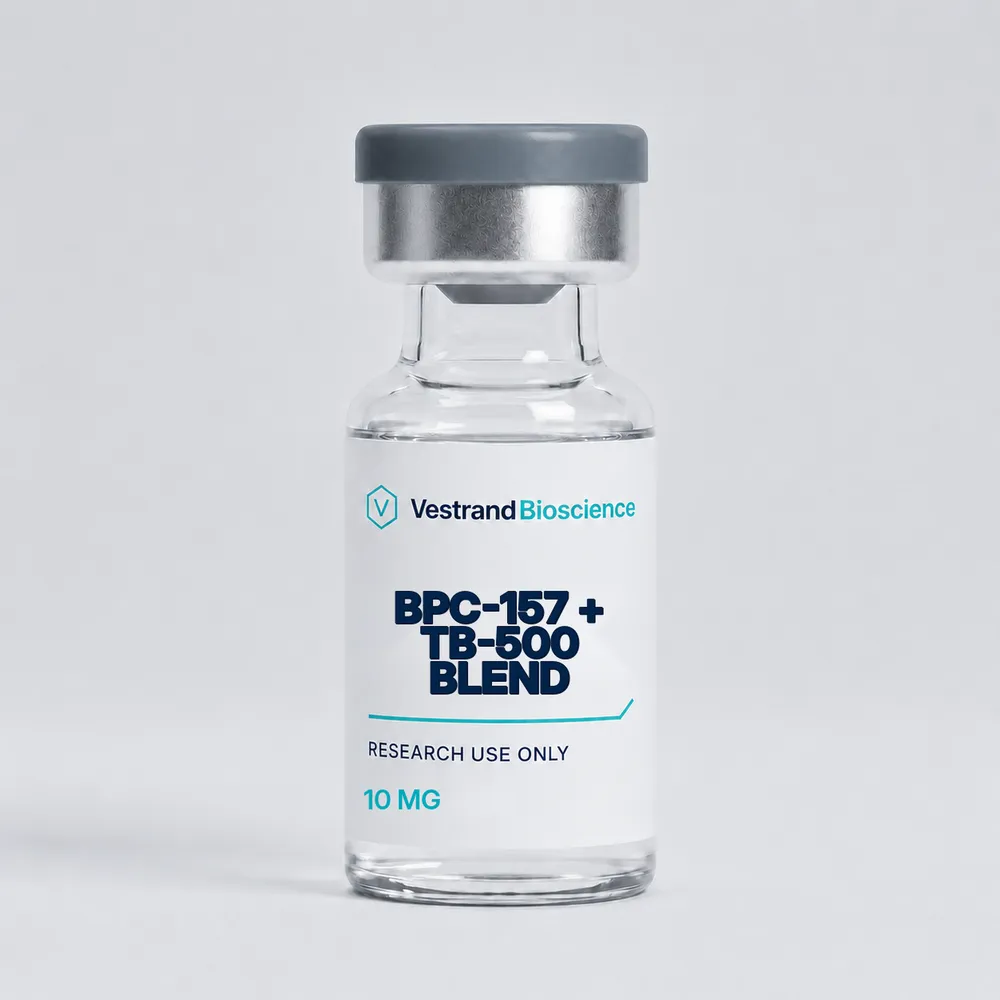
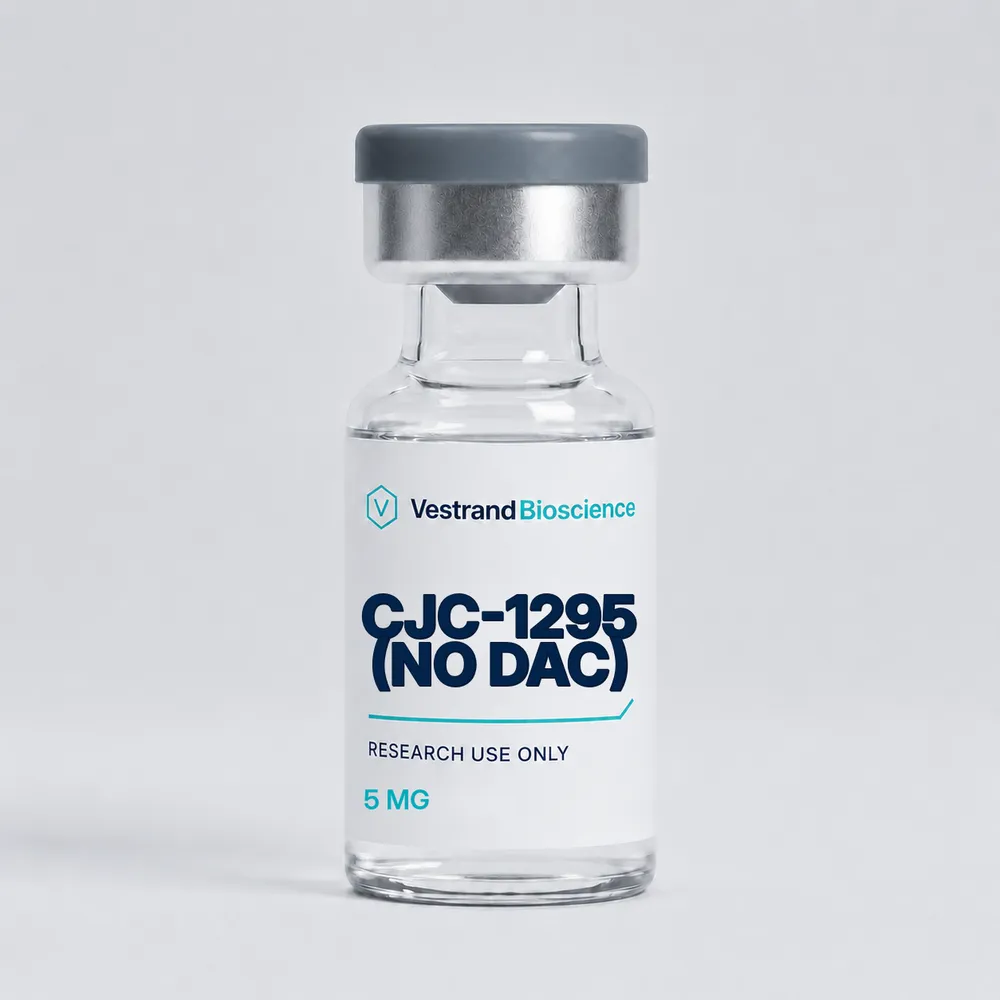
Peptide
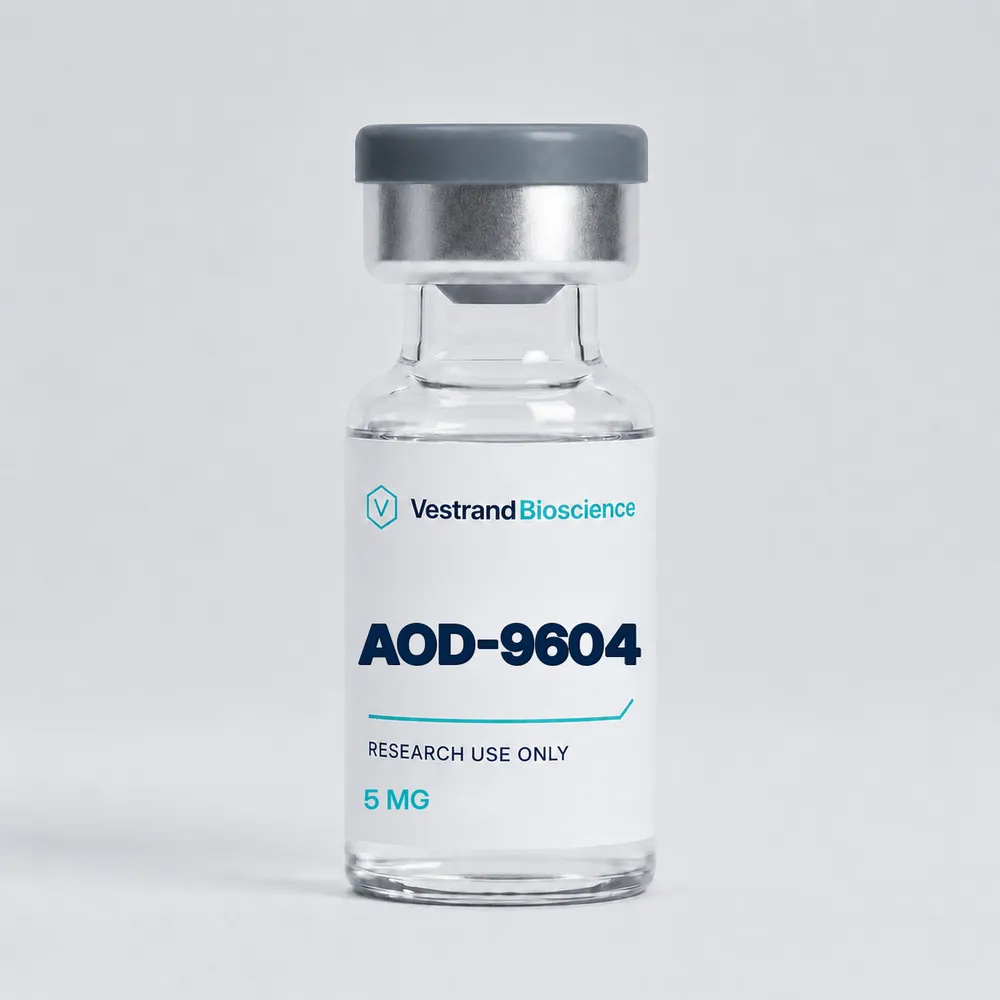
AOD-9604
A short synthetic peptide corresponding to a tail-end fragment of human growth hormone, with one extra building block added at the front.
- Specification
- greater than or equal to 99.93 percent
- Measured lot value
- Testing in progress
A synthetic tetrapeptide of just four building blocks, as a crystalline solid. Best verified by identity, since its name is shared with a different substance.
Vial size
$26.40
10 mg / vial · $2.64 / mg
Quantity
Add 1 more for 3% off
Bundle & save
1 vial
$26.40
each
2 vials
$25.61
3% off
3+ vials
$25.08
5% off
Per-vial price shown. The discount applies automatically at checkout.
Purchase options
Verification
Every batch is identified by a lot number, and its third-party certificate is listed here by lot. Measured values are shown only when they are real and independently verifiable.
Third-party testing in progress
We are currently having this product independently tested by a third-party laboratory. Its certificate of analysis will be published here as soon as the results are available — please check back soon. For laboratory research use only.
Epithalon is one of the smallest peptides in the catalog — a synthetic tetrapeptide of just four building blocks — supplied as a crystalline solid.
Vestrand supplies it as one laboratory reference lot; the certificate lands on the verification page as soon as testing is finalized, retrievable by lot number.
One identity point deserves care. The public database record mixes this defined little peptide up with a different substance — a pineal extract — and even carries a second registry number because of it. The alias 'epithalamin' is sometimes attached to it, too, but the two are not the same material. For that reason, incoming material is best checked against its identity rather than trusted on the strength of the name alone.
For laboratory research use only. Not for human or veterinary use.
Epithalon is a synthetic tetrapeptide (alanine-glutamate-aspartate-glycine). It is catalogued in senescence and cellular-longevity research, where it is associated with telomere-biology research models.
Independent peer-reviewed literature that references Epithalon.
Inhibitory effect of peptide Epitalon on colon carcinogenesis induced by 1,2-dimethylhydrazine in rats
Anisimov VN et al.
Cancer Lett2002
View source for Inhibitory effect of peptide Epitalon on colon carcinogenesis induced by 1,2-dimethylhydrazine in rats (opens in a new tab)Effect of the synthetic pineal peptide epitalon on spontaneous carcinogenesis in female C3H/He mice
Kossoy G et al.
In Vivo2006
View source for Effect of the synthetic pineal peptide epitalon on spontaneous carcinogenesis in female C3H/He mice (opens in a new tab)AEDG Peptide (Epitalon) Stimulates Gene Expression and Protein Synthesis during Neurogenesis: Possible Epigenetic Mechanism
Khavinson V et al.
Molecules2020
View source for AEDG Peptide (Epitalon) Stimulates Gene Expression and Protein Synthesis during Neurogenesis: Possible Epigenetic Mechanism (opens in a new tab)Overview of Epitalon - Highly Bioactive Pineal Tetrapeptide with Promising Properties
Araj SK et al.
Int J Mol Sci2025
View source for Overview of Epitalon - Highly Bioactive Pineal Tetrapeptide with Promising Properties (opens in a new tab)Citations are provided for educational and scientific reference only. They describe independent published research and are not product claims — they do not represent the performance, purity, or intended use of any material offered for sale.
General handling guidance for laboratory research materials — always defer to the product label and the lot certificate of analysis.
Research use only
For laboratory research use only. Not for human or veterinary use.
No reviews yet
Reviews are published only from verified purchases, so none appear until orders ship.

Peptide
A short synthetic peptide corresponding to a tail-end fragment of human growth hormone, with one extra building block added at the front.

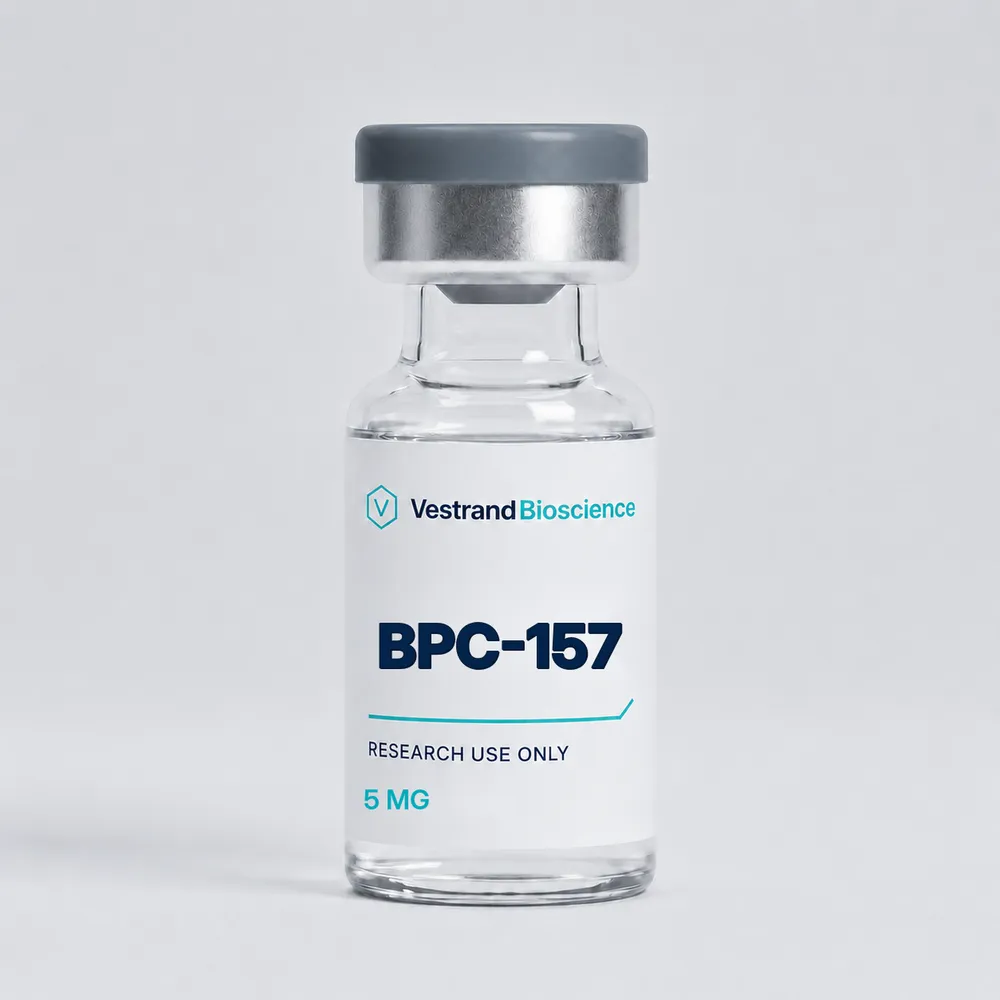
Peptide
A synthetic peptide of fifteen building blocks (a pentadecapeptide), based on a partial sequence of a protein first identified in gastric juice.

Peptide blend
A blend of two peptides — BPC-157 and TB-500 — supplied together. A mixture, not a single substance, with no identity of its own.

Peptide
A growth-hormone-releasing factor analogue of twenty-nine building blocks, also known as Modified GRF (1-29). Easily confused with the closely related sermorelin.